
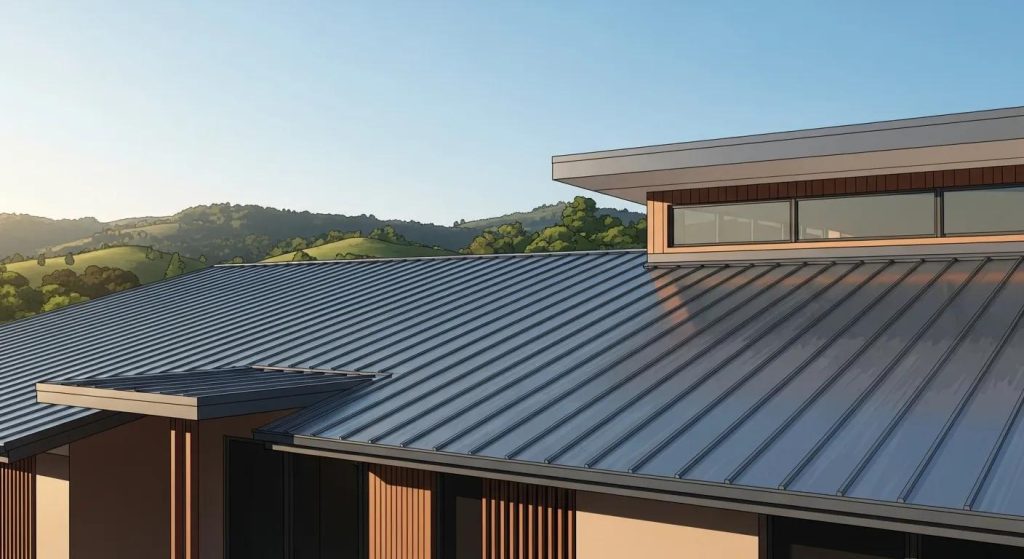
Expert Metal Roofing — Alstonville
Professional roof installation brings together specification, preparation and skilled installation to deliver commercial roof systems that meet structural, safety and operational needs for businesses in Alstonville. This piece explains why specialist metal roofing — particularly Colorbond and BlueScope steel — is often the preferred option for commercial fit-outs, how a proper installation reduces risk, and what owners should expect for performance and lifecycle costs. Many building operators struggle with recurring leaks, undersized drainage and high cooling bills; a professional installation addresses these by combining the right materials, disciplined project management and correct roof plumbing. Read on to understand the main benefits of hiring experienced installers in Alstonville, why metal roofing commonly outperforms alternatives in our climate and bushfire-prone areas, how a commercial project runs from inspection to handover, and a practical checklist for choosing the right contractor. The article also outlines clear problem–solution pathways for leaks, storm damage and drainage, and points to real commercial projects across the Northern Rivers to illustrate outcomes and invite enquiries for fit-outs.
Key Benefits of Professional Roof Installation in Alstonville
Professional installation protects commercial assets by matching materials and workmanship to local conditions and building regulations. Proper substrate preparation, certified fixings and well-designed flashings reduce leak risk and extend roof life, while correctly sized roof plumbing prevents ponding and drainage non-compliance. A professional approach also helps control lifecycle costs through energy-efficient material choices and predictable maintenance schedules — essential for accurate budgeting during fit-outs. The list below summarises the primary benefits building owners and project managers should prioritise.
Professional installation delivers these core benefits:
- Asset protection: Correct preparation and flashings cut leaks and prevent damage to stock and finishes.
- Compliance: Certified trades and documented processes support approvals and insurance requirements.
- Energy efficiency: Reflective coatings and correct insulation reduce cooling loads and running costs.
- Lower maintenance: Quality materials and installation reduce reactive repairs and ongoing expense.
- Safety and continuity: Managed site safety and staged works to minimise disruption to business operations.
These benefits translate into the outcomes commercial owners measure — fewer repairs, less downtime and greater building resilience. The next section converts these service features into concrete business values.
| Service | Attribute | Value/Outcome |
|---|---|---|
| Licensed installation | Certified trades and documented processes | Lower regulatory risk and smooth inspection sign-off |
| Quality assurance | Commitment to addressing issues | Peace of mind and protection for your investment |
| Project management | Trade coordination, safety plans | Minimised downtime and dependable timelines |
| Energy-optimised materials | Reflective finishes, insulation integration | Reduced operational cooling costs |
| Roof plumbing design | Sized gutters, downpipes and scuppers | Elimination of ponding and overflow events |
This table shows how common installation services convert into measurable business results and helps decision-makers compare the value of a professional installation against ad hoc repairs. Understanding these mappings makes it easier to evaluate contractors by the outcomes they promise.
For commercial clients seeking immediate reassurance, Nathan Crake Roof Plumbing provides several commercial-focused assurances that show how professional installation delivers business value:
- Uses Australian BlueScope steel (Colorbond) for long-term corrosion resistance and manufacturer support.
- Provides support after installation, addressing any installation-related defects.
- Maintains full licensing and insurance to support compliance and transfer of risk.
- Offers fair value and a rapid response for urgent repairs or fit-out stages.
These provider-specific points align with the benefits above and explain how professional standards deliver predictable outcomes for commercial fit-outs.
How Professional Installation Delivers Durability and Protects Your Assets
Durability comes from controlling the critical stages of workmanship: substrate inspection, moisture barrier placement, correct fixing patterns and sealed flashings. Inspectors check sheet alignment, correct fastener selection and torque, and the integrity of seals at skylights and penetrations — all steps that reduce common failures like galvanic corrosion and seam separation. Quality control also covers material handling and storage to avoid pre‑installation damage, plus precise roof plumbing integration to divert water from vulnerable junctions. These measures protect internal assets and lower lifecycle risk; the following section links energy performance to overall asset value.
Energy Efficiency Advantages of Metal Roofs for Alstonville Businesses
When combined with reflective Colorbond coatings and adequate insulation, metal roofs reduce solar heat gain and lower cooling demands for commercial buildings — producing operational cost savings over time. Reflective finishes reduce roof surface temperatures, while underlay and bulk insulation limit heat transfer into conditioned spaces, improving HVAC efficiency and stabilising internal temperatures. Metal roofs are also well-suited to rooftop solar installations, making them a strategic choice for businesses pursuing integrated energy solutions during fit-outs. These thermal performance benefits help owners calculate lifecycle savings when comparing roofing options for Alstonville projects.
Why Metal Roofs Are Often the Best Choice for Commercial Buildings in Alstonville
Metal roofing is a common choice for commercial and industrial buildings because it combines durability, speed of installation and lifecycle cost advantages suited to Northern Rivers conditions. In coastal and bushfire-exposed areas, modern steel roofing with protective coatings offers corrosion resistance and complies with performance requirements. Metal systems support modular installation methods that shorten on-site time and reduce disruption — important during fit-outs. Below is a focused comparison of typical metal options and why BlueScope/Colorbond is frequently chosen for commercial work in the region.
This comparison highlights typical metal choices and their commercial benefits.
| Material | Attribute | Business Benefit |
|---|---|---|
| Colorbond (BlueScope steel) | Protective zinc/aluminium coatings and painted finish | Strong corrosion resistance and lower maintenance in coastal air |
| Galvanised steel | Zinc coating only | Lower upfront cost but higher long-term corrosion risk |
| Aluminium sheeting | Lightweight, corrosion-resistant | Good for lightweight structures; requires different fixing systems |
| Stainless components | High corrosion resistance | Used for flashings and critical details where longevity is essential |
Why Colorbond and BlueScope Steel Suit Alstonville’s Climate
Colorbond and BlueScope steel use modern coatings designed to resist corrosion from humidity and salt‑laden air, and our commitment to quality meets commercial expectations. Protective paint systems and sacrificial coatings slow the electrochemical processes that cause corrosion, while manufacturer support helps ensure predictable maintenance intervals for asset managers. For buildings near the coast or rural bushland, these materials strike a balance between corrosion resistance and fire performance and simplify long-term planning by reducing unexpected repairs. Understanding these manufacturer-backed features helps commercial clients choose materials that match expected operating conditions.
How Metal Roofing Lowers Long-Term Costs and Maintenance
Metal roofing reduces long-term costs thanks to lower routine maintenance, longer service life and simpler repairs compared with some alternatives. Routine inspections focus on seams, fasteners and flashings — issues that are generally easier and less expensive to fix on metal systems than on complex tiled roofs. Professional installation lowers the risk of hidden defects, which cuts lifecycle costs and limits operational interruptions. These maintenance and lifecycle benefits make metal roofing an attractive choice for fit-outs where the total cost of ownership matters to stakeholders.
Optimizing Metal Roofing for Alstonville Businesses
Commercial roof installation follows a staged workflow: it starts with inspection and finishes with documented handover and post-installation support. The process aligns material and fall choices with drainage, compliance, safety planning and trade coordination to deliver on time with minimal business impact. Clear scope definition and a written plan support accurate budgets and allow fit-out teams to coordinate services such as HVAC, electrical and solar. The numbered list below outlines the typical stages project managers should expect when commissioning commercial roof installation in Alstonville.
A typical professional installation process includes the following stages:
- Preliminary inspection and risk assessment: site survey, structural review and drainage analysis.
- Design and specification: material selection, fall calculations and compliance documentation.
- Pre‑construction planning: permits, trade scheduling and safety plans.
- Installation and quality control: sequenced roofing works with inspection checkpoints and testing.
- Handover and documentation: as‑built records, maintenance schedules and details of our post-installation support.
This step-by-step outline gives commercial owners a clear roadmap for how their roof installation will be managed; the next section explains how those stages apply to fit-out coordination and timing expectations.
Steps Involved in Commercial Roof Installation and Fit-Out Projects
Commercial roof installation for fit-outs needs close coordination with mechanical, electrical and interior teams so penetrations and supports are integrated without compromising waterproofing. Work typically begins with a detailed scope meeting, followed by permit procurement and a construction program that schedules noisy or disruptive tasks outside critical operating hours where possible. Safety management, scaffold and access planning are essential because commercial sites often remain occupied; installers also manage deliveries and temporary weather protection. Clear communication protocols and a single point of contact for the roof scope help prevent scope creep and give certainty to fit-out timelines.
How Long Does a Roof Replacement Take and What to Expect
Replacement duration depends on building size, complexity and weather. Small commercial roofs can often be replaced in days, while larger industrial buildings may take several weeks when fit-out coordination is required. Factors that affect timing include the number and complexity of penetrations, structural repairs, access constraints and compliance inspections; contingency for weather is vital in Alstonville’s variable climate. Expect staged handovers so parts of a site can remain operational, and ask your installer for a clear program with milestone dates and buffers. Early stakeholder engagement and operational planning are the best ways to limit downtime and keep projects on schedule.
What to Look for When Choosing Alstonville Roofing Contractors
Choosing the right roofing contractor is a risk‑management decision that should prioritise licensing, insurance, clear documentation of support, and relevant commercial experience. Contractors should provide evidence of compliance, clearly explain their approach to post-installation support, and show past commercial installations that match your project’s technical profile. Clear proposals, defined project management roles and strong communication reduce uncertainty and let owners coordinate internal stakeholders with confidence. The checklist below offers a practical framework for contractor procurement and selection in Alstonville.
Checklist for choosing a commercial roofing contractor:
- Verify licensing and insurance: request proof of trade licence and current insurance certificates.
- Understand post-installation support: ensure our commitment to quality is documented and defines how we address issues.
- Assess relevant experience: ask for case summaries of similar commercial fit-outs or industrial works.
- Review project management approach: check for a single point of contact, a safety plan and an inspection regime.
- Evaluate material specifications: confirm BlueScope/Colorbond or suitable alternatives are specified where appropriate.
Using this checklist reduces the risk of appointing a contractor who cannot meet commercial compliance demands. Organisations ready to progress to procurement are encouraged to make direct enquiries for commercial fit-out projects.
If you’re planning a commercial fit-out or roof replacement and want a specialist conversation, Nathan Crake Roof Plumbing invites enquiries for a free consultation or quote to discuss requirements and timelines. The company is listed on Google Business Profile for independent verification; a consultation will clarify scope, timing and our commitment to quality tailored to your project. Requesting a written proposal and program provides the documentation needed for procurement approvals and capital planning.
Why Licensing, Insurance and Post-Installation Support Matter for Commercial Roofing
Licensing confirms tradespeople are authorised to perform roof plumbing and roofing work to local standards, while insurance transfers financial risk for on-site incidents and property damage. Our commitment to quality provides a clear basis for addressing any workmanship issues that appear after handover, and clear documentation of this support is vital when projects involve tenant fit-outs or high‑value equipment under the roof. Without these protections, owners face uninsured losses, delayed compliance sign-offs and lengthy disputes; insisting on verifiable documents is an effective way to manage procurement risk. Knowing these protections helps owners make procurement choices that safeguard budgets and operations.
How Nathan Crake Roof Plumbing Stands Out Among Alstonville Roofing Experts
Nathan Crake Roof Plumbing operates as a commercial roofing specialist across Alstonville and the Northern Rivers, focusing on metal re‑roofing and complete roof plumbing services for residential, commercial and industrial clients. Notable proof points include the use of Australian BlueScope steel (Colorbond) for corrosion‑resilient roofing, a strong commitment to quality and fair value, with rapid response for urgent repairs. The company references projects such as the Ballina Treatment Plant and the Federal Hotel Alstonville and reports significant project volume across the region. These credentials give commercial clients clear indicators to assess against the checklist above.
How Professional Installation Solves Common Commercial Roofing Problems in Alstonville
Professional installation tackles common commercial issues — leaks, storm damage, ponding and inadequate drainage — by applying correct design standards, durable materials and precise workmanship. Root-cause diagnosis often finds problems such as insufficient fall, undersized gutters or failed flashings, which professional teams fix through redesign, appropriate sizing and robust flashing systems. Preventive maintenance programs after installation reduce reactive repairs and make operational budgets more predictable. The list below summarises typical issues and the professional remedies that resolve them effectively.
Common problems and professional remedies:
- Leak diagnosis and repair: locate the source, repair or replace flashings and seal penetrations to stop ingress.
- Storm damage remediation: replace damaged sheeting and reinforce fixings to restore weatherproofing and structural integrity.
- Ponding and drainage failure: resize gutters/downpipes, improve fall or add scuppers to remove standing water.
- Inadequate flashings at penetrations: install custom flashings and collars to ensure long-term waterproof joints.
These problem–solution pairs show how professional installations focus on lasting repairs rather than short-term patches; the subsections that follow go into diagnostic and drainage practices in more detail.
Typical Issues Like Leaks and Storm Damage — How They’re Handled
Common failure points include degraded flashings, corroded or loose fasteners and sheet damage from wind‑borne debris. Addressing these starts with a systematic inspection and a decision between targeted repair or full re‑roofing based on the extent. Professional diagnosis uses a checklist — inspecting penetrations, seams, membrane condition and substrate integrity — to determine the right course. When replacement is required, installers prioritise sequencing to protect internal fit-outs and coordinate with insurers and stakeholders to document defects and works. A prompt professional response limits secondary interior damage and speeds operational recovery after storms.
How Expert Roof Plumbing Improves Guttering and Drainage for Commercial Buildings
Expert roof plumbing applies hydraulic calculations and best-practice design to size gutters, downpipes, and scuppers so large catchments shed water reliably during heavy rain typical of the region. Design steps include calculating the catchment area, specifying fall gradients to prevent ponding and selecting corrosion‑resistant materials for gutters and downpipes, all of which reduce the risk of overflow and structural water damage. Integrating rainwater harvesting points and providing safe access for maintenance further boost resilience and sustainability. These drainage improvements protect the building envelope and lower long-term maintenance for facility managers.
Where to See Examples of Successful Commercial Roof Installation Projects in Alstonville
Real project examples show how professional roof installation delivers outcomes that matter to commercial operators: restored weatherproofing, improved energy performance and timely handover during fit-outs. Referenced projects include work at the Ballina Treatment Plant and roof works at the Federal Hotel Alstonville, illustrating project scale and sector variety. The compact matrix below summarises challenge, approach and outcome for representative commercial jobs so prospective clients can judge fit and capability.
| Project | Challenge | Outcome |
|---|---|---|
| Ballina Treatment Plant | Large catchment, corrosion risk, strict compliance | Re‑roof with Colorbond, upgraded drainage; compliance documentation delivered |
| Federal Hotel Alstonville | Heritage interfaces, tight schedule for hospitality fit-out | Custom flashings, staged installation to keep operations running during works |
| Industrial warehouse fit-out | Ponding and thermal load | Re‑profiled roof sheeting, insulation integration and enlarged downpipes for rapid drainage |
Commercial Fit‑Out Projects That Demonstrate Quality and Skill
Typical quality projects include hospitality refurbishments, municipal infrastructure works and industrial warehouse upgrades where the roofing scope needed close coordination with other trades and compliance stakeholders. Success factors in these jobs were accurate metal sheeting specification, custom flashing at complex junctions and staged programs that reduced business disruption. Documented outcomes commonly note improved waterproofing, easier ongoing maintenance and post-installation support aligned with project handover. These examples help procurement teams set realistic expectations for timeframes, documentation and maintenance planning.
What Client Feedback Tells Us About Professional Roof Installation
Although individual testimonials aren’t reproduced here, common client feedback on commercial projects highlights fast response times, clear communication and the reassurance that our commitment to quality provides after handover. Owners frequently report fewer unexpected costs and fewer operational interruptions once a professional installation is complete. Verifying references and reviewing past project documentation offers the strongest assurance for decision-makers; prospective clients should request case summaries and details of our post-installation support during tender evaluations.
For commercial enquiries about fit-outs, project summaries or tailored proposals, Nathan Crake Roof Plumbing welcomes direct contact to discuss scope and provide a written quote. Prospective clients are encouraged to request a free consultation that outlines materials, timelines and our commitment to quality as part of procurement. The Google Business Profile and documented project references can be used to independently verify past work and suitability.